
How to Collaborate Effectively Remotely on Ableton: Practical Guide for Musicians
Introduction: Musical Collaboration in the Digital Age
Music is by nature a collective art. Yet, finding partners to play, compose, or produce together remains a challenge for many musicians and professionals. Ableton Live, with its intuitive interface and advanced features, is now a key tool to overcome geographical and time barriers. This guide explores how to collaborate remotely on Ableton by combining creativity, commitment, and real human exchange.
1. Finding the Right Partners: Compatibility and Musical Affinities
First and foremost, the key to successful collaboration lies in meeting musicians or producers who share artistic values and a compatible work rhythm. Local platforms, specialized forums, and social networks dedicated to music are fertile grounds to find future collaborators. At Benoizzy, we encourage prioritizing local connections to facilitate physical meetings when possible, thus strengthening creative chemistry.
Practical Tips
- Clearly present your style, references, and expectations.
- Exchange some ideas or demos quickly to sense compatibility.
- Prioritize the quality of the human relationship over the quantity of contacts.
2. Initial Exchanges and Technical Setup
Once partners are chosen, the technical setup is the next step. Ableton Live offers several methods to collaborate:
- Ableton project sharing: by sending .als files and associated samples via cloud services (Dropbox, Google Drive).
- Session Link: an Ableton protocol to synchronize multiple sessions in real time, ideal for playing together remotely.
- Collaborative plugins: some tools like Splice allow sharing and versioning your sessions.
It is essential to establish clear organization to avoid confusion: track naming, project structures, common tempo, and shared file formats.
Boosting Communication
Use instant communication tools (Discord, Zoom) for live sessions and informal exchanges. Scheduling regular meetings helps maintain creative momentum and commitment to the project.
3. Rehearsing and Creating Together Despite the Distance
The heart of collaboration is the moment when ideas come to life. Thanks to Ableton Live, it is possible to improvise, record, and edit together in real time or asynchronously:
- Virtual jam sessions: by synchronizing your sessions via Link, you can play simultaneously, recreating the dynamic of a real band.
- Asynchronous work: each person works on a part of the project at their own pace, then shares their changes.
This requires discipline and respect for the agreed schedule but opens up unprecedented creative possibilities. At Benoizzy, we have observed how this method strengthens autonomy and the richness of exchanges, especially for projects involving musicians, singers, and producers.
4. Recording and Producing Together: Tips for Professional Quality
Collaborating remotely does not mean sacrificing sound quality or mix cohesion. Here are some recommendations:
- Use lossless audio formats (WAV, AIFF) for exchanging tracks.
- Share your Ableton presets and configurations to standardize the sound.
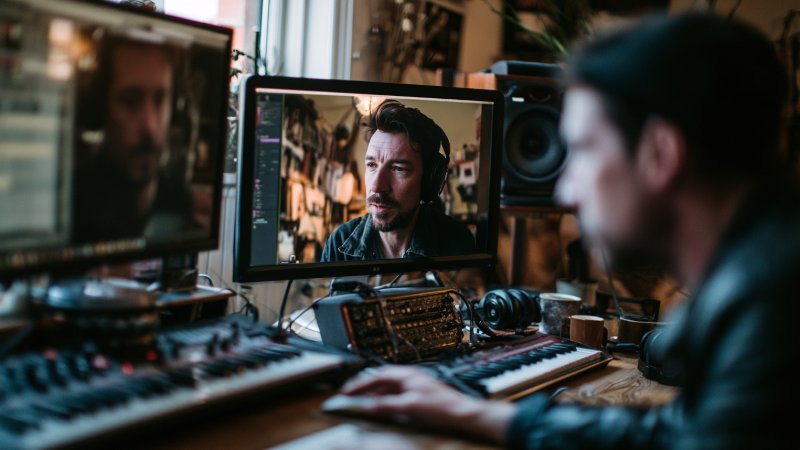
- Organize regular feedback sessions via video calls to validate arrangements.
- Consider involving a local sound engineer to finalize mastering, ensuring a coherent output for live or broadcast.
5. Creating Human Connection Despite the Distance
The success of remote musical collaboration does not depend solely on technology. Human investment is essential. It involves building mutual trust, respecting each other's ideas, and celebrating progress together.
At Benoizzy, we encourage groups to organize regular meetings, even informal ones, to share their passion, discuss projects, and lay the foundations of a united and creative local community.
6. Concrete Opportunities: Concerts, Local Scenes, and Collective Projects
Collaboration on Ableton can lead to concrete projects: creating original tracks, preparing sets for concerts, recording EPs, etc. The connection with the local scene is a powerful lever to transform these digital collaborations into live experiences, with in-person rehearsals, concert dates, and shared visibility.
Many groups and collectives are emerging today thanks to these hybrid practices, combining technical rigor and human exchange, and this is a trend that Benoizzy values at the heart of its actions.
Conclusion: Ableton Serving a Lively and Human Musical Collaboration
Collaborating remotely on Ableton is now an accessible and stimulating reality for musicians, producers, and artists. Beyond the tools, it is the will to share, innovate, and create authentic connections that makes all the difference. By combining rigor, creativity, and human commitment, remote musical projects can not only result in quality works but also strengthen the vitality of local scenes and artistic communities.
At Benoizzy, we believe that music is a universal language that, thanks to technologies like Ableton, continues to bring artists closer together, regardless of their locations and backgrounds.