
Producing Alone in Your Room: Creative Freedom or Musical Isolation?
Introduction: The Two Sides of Bedroom Production
With the advent of accessible technologies, producing music alone in one’s room has become a common practice among musicians, producers, and singers. This autonomy allows for total creative freedom but can also lead to isolation that hinders artistic development. At Benoizzy, we know that at the heart of music lies collaboration: playing together, recording as a group, rehearsing, and creating local connections are essential to growing one’s project. So how can one reconcile creative solitude with collaborative openness?
Creative Freedom: A Fertile Ground for Experimentation
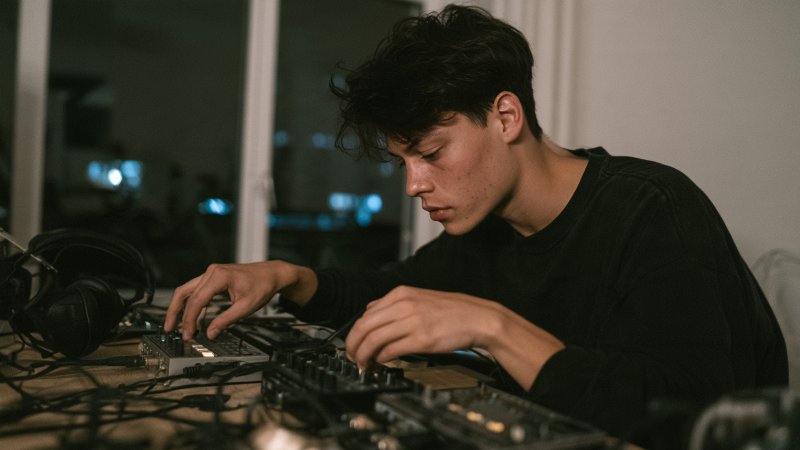
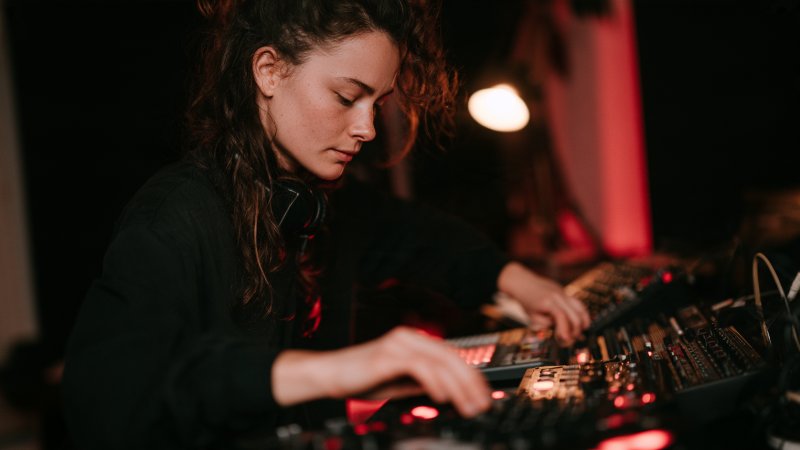
Working alone at home offers unparalleled flexibility. The musician can experiment at any time, without time constraints or the risk of disrupting a group. This independence often pushes one to develop a strong sonic identity, refine their style, and master their digital tools. The room thus becomes a true personal laboratory for composing, mixing, and arranging.
But this freedom is not without limits. Without regular external feedback, it is easy to lock oneself into one’s own codes, which can slow progress or limit the diversity of influences.
Isolation: A Hindrance to Collaborative Dynamics
Solo work can lead to a form of isolation that impacts motivation and creativity. Musicians who produce alone often report the difficulty of not sharing their ideas in real time, nor feeling the collective energy of a group. This solitude can also complicate concert preparation, the search for complementary musicians, or building a local network.
At Benoizzy, we observe that finding reliable collaborators, with good artistic compatibility and balanced involvement, is a major challenge for those starting bedroom production.
Building Musical Collaboration Despite Solo Production
1. Finding the Right Partners Around You
Participating in local scenes, workshops, jam sessions, or using community platforms like Benoizzy allows meeting musicians who share the same inspirations. The first contact is often initiated by an informal exchange, sharing tracks, or an invitation to rehearse together. These meetings are essential to break isolation and test musical and human compatibility.
2. Developing Artistic and Human Compatibility
Beyond technical skills, the success of a collaboration relies on trust, clear communication, and each person’s commitment. In the context of home production, it is important to establish a framework for creative exchanges: what roles does each person play in the project? What are the expectations in terms of time, style, or goals? This framework facilitates rehearsals, recording sessions, and concert preparation.
3. Setting Up Collaborative Routines and Tools
Digital advances now allow overcoming distance. Each member can work from home and share their tracks via online platforms. But nothing replaces physical rehearsals, which establish group dynamics and collective energy. Organizing regular sessions, even short ones, helps maintain the connection, adjust arrangements, and build a true musical project.
Concrete Examples: Stories of Collaboration Starting in the Bedroom
On Benoizzy, several groups have emerged thanks to connecting musicians who initially worked alone. For example, a beatmaker producer met a singer through the platform. After several exchanges of demos and a first improvised rehearsal, they quickly added a local bassist and drummer. Together, they built a repertoire for concerts in their city, mixing bedroom production and live energy.
These stories illustrate that solo production does not exclude collaboration; on the contrary, it can be the starting point.
Conclusion: Towards Complementarity Between Solitude and Collective
Producing alone in one’s room is a valuable step to refine one’s musical universe. Yet, full artistic fulfillment is often found in meeting and sharing with other musicians. The key lies in balancing creative autonomy and openness to local collaboration, which nurtures group dynamics, opens concert opportunities, and enriches creation.
At Benoizzy, our mission is to support this meeting by facilitating contact, valuing compatibility, and supporting projects that build beyond the boundaries of the room. Together, let’s create the living and shared music we love.