
Why Are Electronic Artists Multiplying Their Musical Projects?
Introduction : un besoin croissant de diversité créative
Contemporary electronic musicians no longer limit themselves to a single project. They often chain several collaborations, groups, or artistic identities in parallel. Why is this phenomenon growing? At a time when music becomes as social as it is technical, this multiplication reflects a strong desire for diversification, openness, and responsiveness to their musical and community environment.
La collaboration : moteur essentiel dans la musique électronique
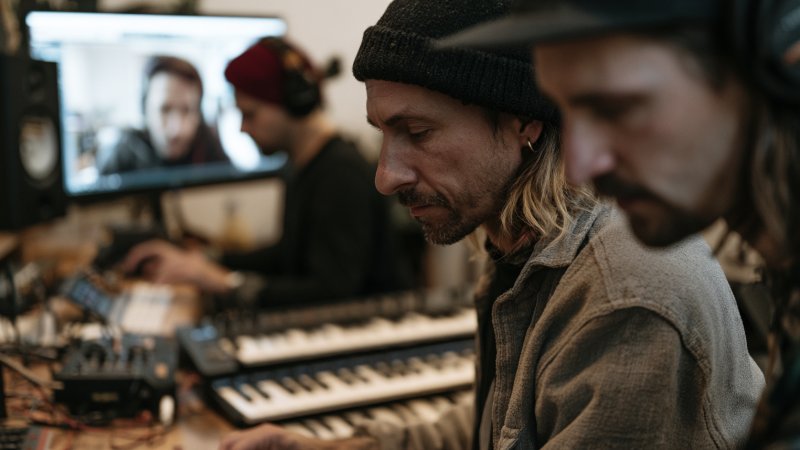
Contrary to the image of a solitary artist behind their machines, the electronic scene is full of collective initiatives. Benoizzy observes daily how artists actively seek to meet other musicians, singers, producers, or technicians to create together. This dynamic manifests from the first contact: exchanges on local platforms, meetings at concerts, improvised jam sessions in studios or shared spaces.
These collaborations are not always planned long-term. They often arise from mutual curiosity, artistic affinity, then materialize through regular rehearsals, file exchanges, or even duo or group performances. Musical and human compatibility remains the key to engaging in a solid and lasting project.
Des projets multiples pour explorer différents styles et publics
An electronic producer can thus accumulate several projects: a live dancefloor set, an experimental ambient project, a collaboration with an indie singer, a techno duo, etc. This diversity allows them not to confine themselves to a single genre, to explore different facets of their creativity, and to address varied audiences. It also offers flexibility to adapt to local opportunities and events, ranging from clubs to festivals, including alternative scenes.
La scène locale comme terreau fertile
Benoizzy highlights the importance of local scenes in building these multiple projects. Artists take advantage of proximity networks to find reliable partners, rehearsal spaces, sound engineers, and concert programmers. This virtuous circle stimulates creation and dissemination. For example, an electronic musician may start with a duo project with a local drummer, then invite a saxophonist, before partnering with a videographer for a multimedia live show.
Les étapes clés d’un projet électronique collaboratif
- Meeting and first contact: via social networks, events, or shared studios, the initiation of a project relies on trust and curiosity.
- Establishing compatibility: exchanges of tracks, rehearsals, discussions about influences and shared ambitions.
- Commitment and organization: defining a rehearsal schedule, choosing roles and responsibilities, searching for suitable venues.
- Creation and recording: studio sessions, sound recording and technical experiments, often with collaborative digital tools allowing remote work.
- Live presentation and dissemination: programming in local concerts, festivals, clubs, or specialized events, which feeds notoriety and opens new doors.
Les freins et les solutions dans la collaboration musicale
While the desire to multiply projects is strong, some obstacles persist: participant availability, artistic divergences, logistical or financial constraints. Benoizzy encourages artists to structure their exchanges, clarify objectives from the start, and use appropriate tools to facilitate project management and communication.
Creating a solid local community, with accessible rehearsal spaces, shared studios, or dedicated events, plays a fundamental role in overcoming these difficulties.
Conclusion : une stratégie au service de la créativité et de la communauté
Multiplying electronic projects is not simply a matter of productivity or image. It is above all a human approach, based on meeting, exchange, and sharing. It allows artists to remain inventive, rely on a dynamic community, and respond to the fluctuating realities of the music sector.
Benoizzy positions itself as a facilitator of these connections, offering musicians the tools and visibility necessary to build genuine collaborative projects, in line with their aspirations and their territories.